Custom Barn Doors: Modern, Fashionable Solutions for Global Projects
- Share
- publisher
- BLOSSOM CHEER
- Issue Time
- Dec 11,2025
Summary
For developers, contractors, and design firms, the selection of interior door systems is a critical decision that directly impacts the functionality, flow, and perceived value of a project. While standard swing doors serve a basic purpose, the strategic use of fashionable interior doors like custom barn and French systems can transform a space, offering superior design flexibility and space optimization.
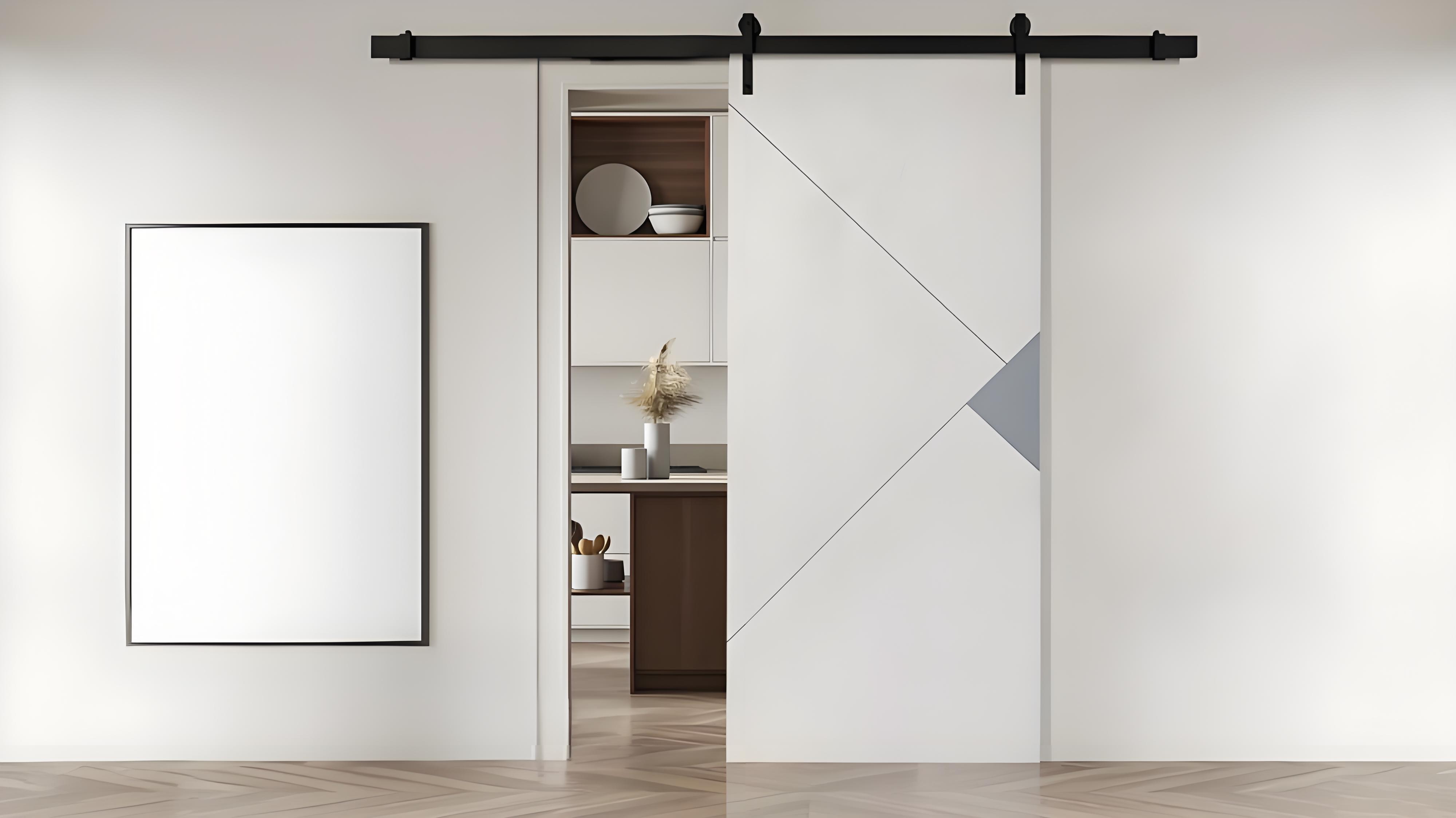
A project-friendly playbook to build barn door packages that install smoothly, stay consistent across units, and match modern design intent.
Barn doors are popular in projects because they solve real layout problems: they keep circulation clear in tighter plans while adding a strong architectural feature.
For project teams, the risk is rarely “style”—it’s unclear specifications.
When opening method, panel build, hardware grade, and privacy needs are written into a repeatable spec package, installation becomes predictable.
If you need to save space and maintain a clean design feature—without requiring a fully sealed, framed swing door—barn doors can be a great fit.
Typical applications include:
Project success depends on a spec package that factories can produce consistently and installers can follow without guessing.
Use the checklist below as your baseline.
In projects, “custom” should be structured.
We recommend separating customization into four layers so your team can approve quickly and avoid rework.
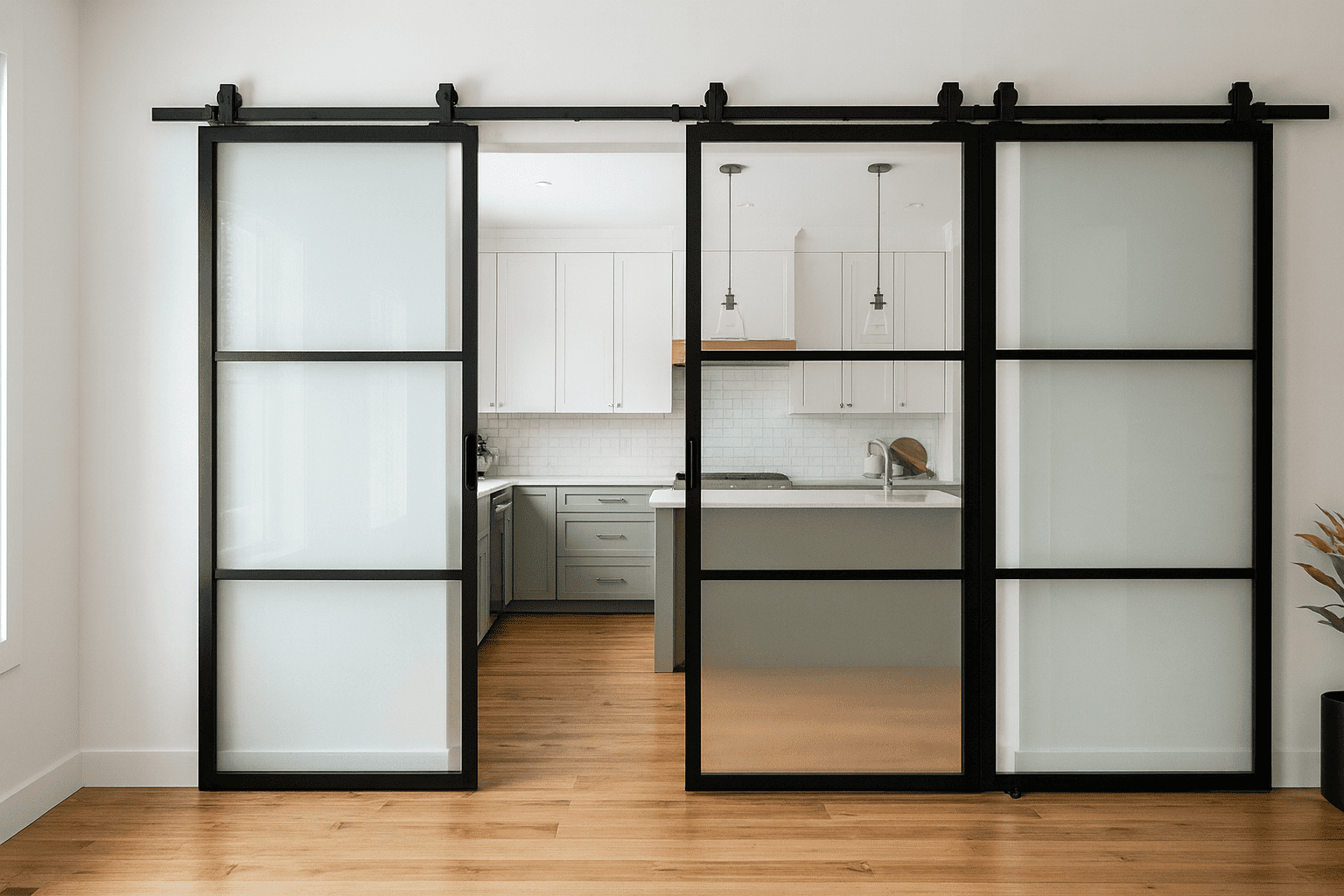
When a project needs natural light while maintaining privacy, custom glass barn doors can be a strong solution.
A practical selection order is:
privacy level → glass type → frame finish → safety requirement.
If clients want a “French look,” you can mimic french doors design using divided-lite grids (true or simulated) with tempered glass,
while keeping the sliding barn-door function. This helps maintain a consistent style across rooms without swing-space conflicts.
A project-ready OEM plan is not just “making doors.”
It’s a repeatable workflow:
shop drawings → sample approval → mass production → QC checkpoints → export packaging → installer-ready kits.
Most barn door issues happen during installation, not manufacturing.
Installers need three things:
Strong wall support:, level track alignment, and correct floor guide placement.
Share your opening sizes, finishes, and glass/hardware requirements. We’ll confirm feasibility and propose an optimized OEM spec package.
Custom Barn Door Projects: Specifications, Glass Options, OEM Execution, Installation Guidance
1) Where Barn Doors Work Best in Project Planning
2) Specs That Prevent On-Site Problems
Spec item
Define this (project-ready)
Why it matters
Opening & slide space
Clear opening width/height + slide-side wall space (≥ door width)
Prevents “door won’t open fully” and conflicts with switches, trims, furniture
Door size & overlap
Door width = opening width + overlap (typically 50–100 mm each side)
Controls edge gaps, light leakage, and basic privacy
Panel thickness / weight
Thickness target (e.g., 35–45 mm) + estimated weight range
Drives hardware rating, quieter operation, and durability
Hardware rating
Track length + roller type + load rating (≥ 1.5× door weight)
Reduces noise, sagging, and derail risk in high-traffic use
Backing / wall support
Header/backing requirements (wood studs / steel studs / concrete)
Most common failure point: fasteners anchored into weak drywall
Floor guide
Guide type + floor finish (tile/wood/carpet) + bottom clearance
Prevents door sway and damage to bottom edges
Privacy expectation
Standard gap vs. add overlap strips / edge seals (if required)
Avoids the most common “barn door complaint” after handover
Finish standard
Color code, sheen level, scratch resistance requirement
Controls consistency across units and production batches
3) Building a Custom Barn Door Package (What “Custom” Really Means)
4) Custom Glass Barn Doors: Options, Privacy, and Safety
Goal
Recommended glass
Typical use
Maximum light
Clear tempered glass
Retail partitions, interior corridors, showrooms
Privacy + light
Frosted or reeded/rain tempered glass
Offices, meeting rooms, clinics
Decorative texture
Reeded / fluted / patterned tempered glass
Hospitality and boutique interiors
Higher safety concern
Laminated safety glass (when required)
High-traffic or code-driven environments
5) OEM/ODM Execution: Documents, QC, Packaging, Batch Consistency
6) Installation Guidance: What Installers Need on Day One
FAQ (Project Questions)
A: Yes—if privacy expectations are defined. Specify overlap, handle clearance, and optional edge seals early.
A: Start schedule, finish, thickness/weight target, hardware grade, glass type (if any), and packaging requirements.
A: Barn doors are surface-mounted without a full perimeter frame. If stricter privacy is needed, use overlap strips / seals.